Case Study: A Research Framework to Guide Evidence-Based Urban Green Space Planning for Health
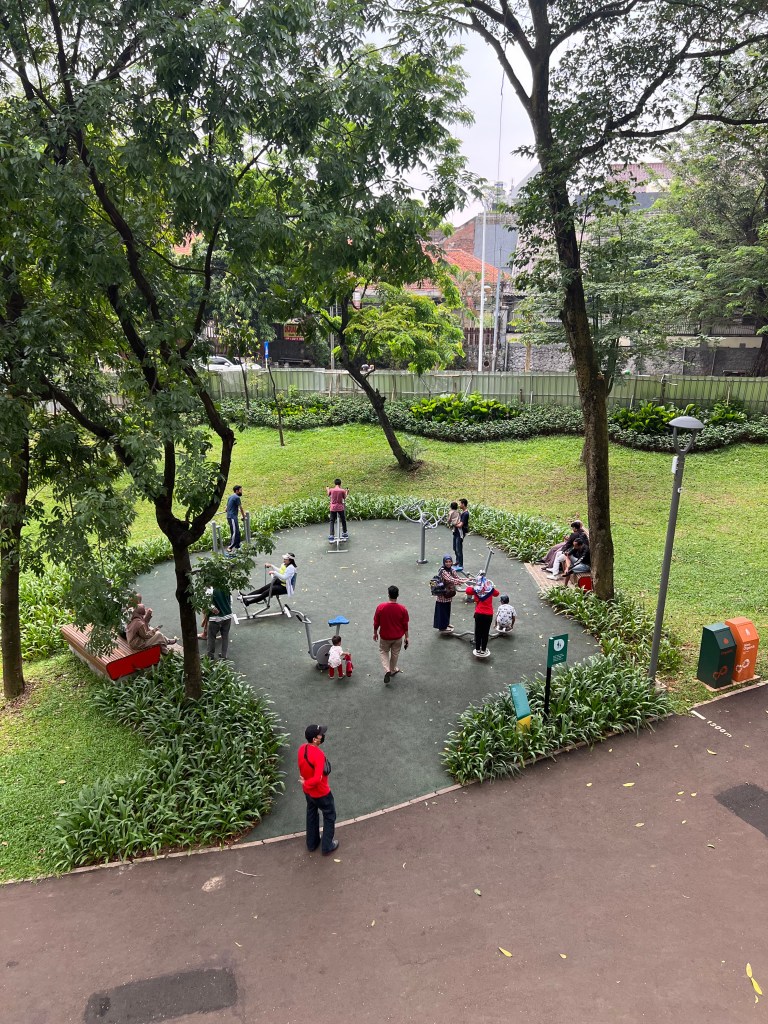
The Challenge Urban planners, landscape designers, and public health agencies increasingly recognize that urban green spaces (UGS) can promote human health. However, despite mounting evidence of health benefits, cities struggle to systematically use green spaces as a public health solution. A critical question remained unanswered: How much green space exposure is needed for health benefits? And more fundamentally: What specific attributes of green spaces—size, quality, accessibility, biodiversity—actually produce measurable health outcomes?
Without clear guidance on the “dose” of green space needed or which design features matter most, cities were making costly investments in parks and greenery without confidence they would achieve intended health outcomes. Studies showed inconsistent results—some found positive health effects, others found none or even negative associations. This inconsistency left planners without actionable guidance for designing effective health-promoting green spaces.
Research Team Approach Led by Dr. Zhang, we developed a comprehensive “dose-response” conceptual framework that fundamentally reconceptualizes how we study and understand the relationship between urban green spaces and health. Through a systematic review of 70 quantitative studies across 40 cities (2001-2015) and analysis of existing frameworks, we created a research model that:
Defined “Dose” as Multi-Dimensional Experience: Rather than simply measuring green space quantity (area or tree cover), “dose” is defined as the composite of:
- UGS Provision: quantity, quality, and accessibility of green spaces
- UGS Exposure: frequency, duration, and intensity of interaction (from passive viewing to active use)
Clarified Causal Pathways Through Mediators: Identified three main mechanisms by which green spaces affect health:
- Environmental effects: air quality improvement, temperature regulation, noise reduction, phytoncides from vegetation
- Psychological/physiological responses: stress reduction, attention restoration, parasympathetic activation
- Behavioral changes: increased physical activity, enhanced social interaction
Recognized Critical Moderators: Demonstrated that health benefits vary based on:
- Individual factors: age, gender, socioeconomic status, physical condition, nature relatedness, available time
- Environmental factors: weather, microclimate, seasonal variations
- Scale of analysis: neighborhood vs. city-wide assessments yield different results
Introduced Dose-Response Thresholds: Proposed that health benefits follow a curve with critical thresholds:
- Minimum threshold (G_min): below which no health benefit occurs
- Maximum threshold (G_max): beyond which additional quantity yields diminishing returns
- Quality shifts: how improving qualitative attributes (design, biodiversity, amenities) can shift the entire curve upward
The Framework’s Value
For Research Design: Provided structured guidance for designing studies that produce comparable, actionable results rather than conflicting evidence
For Spatial Planning:
- Clarified that local/neighborhood scale (not city-wide) is optimal for planning green space interventions
- Explained why multi-scale analysis reveals patterns invisible at single scales
- Demonstrated that larger scales mask disparities in green space provision
For Design Practice:
- Identified specific UGS features linked to health outcomes (see comprehensive linkage tables)
- Showed that quality often matters more than quantity for health benefits
- Revealed trade-offs between positive services and potential disservices (allergens, fear, maintenance issues)
Published: Zhang, L., Tan, P. Y., & Diehl, J. A. (2017). A conceptual framework for studying urban green spaces effects on health. Journal of Urban Ecology, 3(1), jux015.


 Jessica A. Shea, PhD